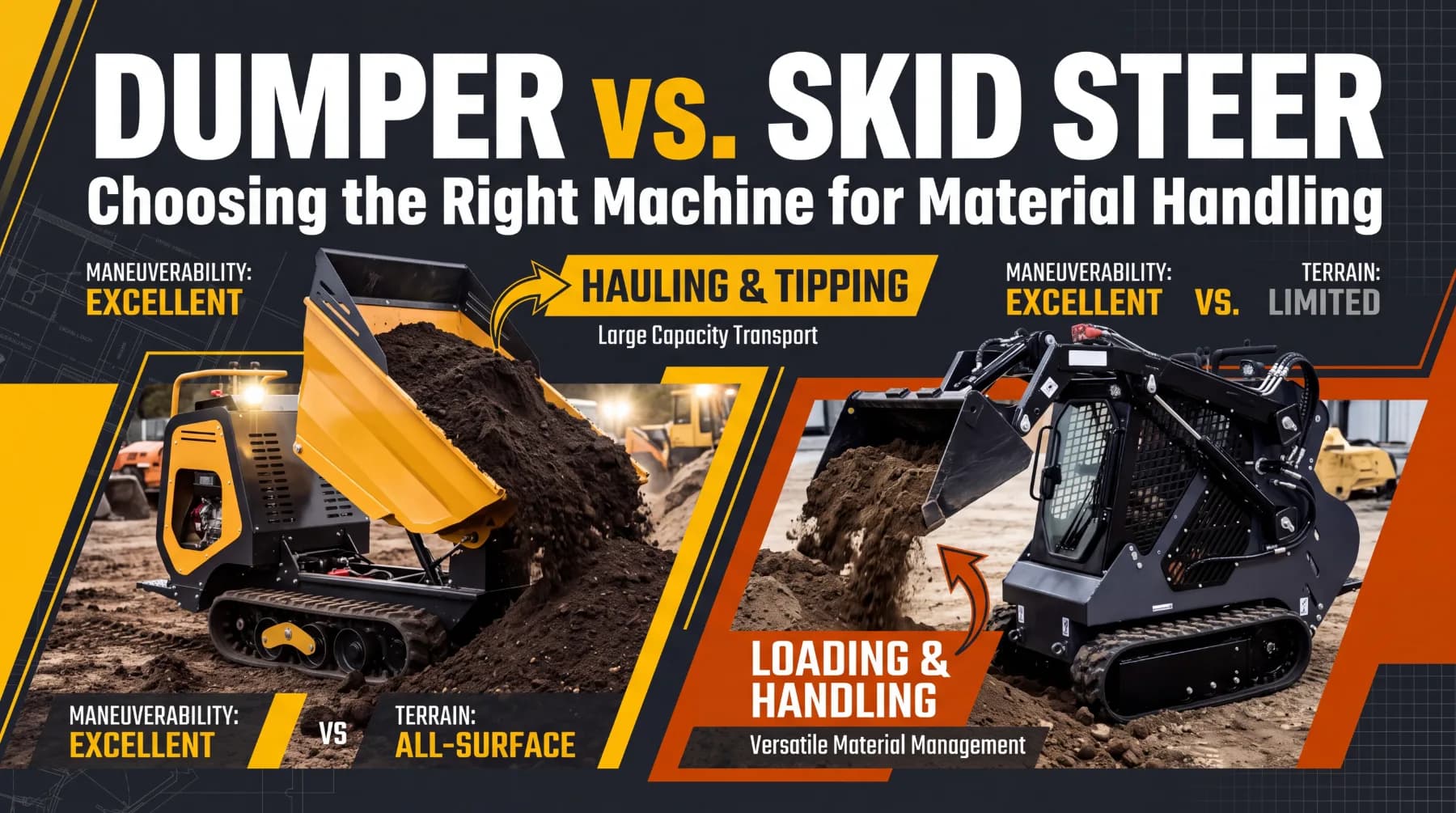
Material moves constantly on a jobsite, and the machine you choose to move it shapes how efficiently your whole operation runs. Two of the most useful options are the dumper and the skid steer, and while both deal with material, they do fundamentally different jobs. A dumper is built to haul and unload bulk material quickly, while a skid steer is built to handle, lift, and manipulate material with a wide range of attachments. Confusing the two can leave you with a machine that fights your work rather than supporting it. This guide compares dumpers and skid steers across their core roles, capacity, maneuverability, and loading performance, then helps you decide which one fits your project. By the end, you will understand exactly what separates these machines and how to choose with confidence.
Material Transport vs. Material Handling
The clearest way to understand these two machines is to recognize that they solve different problems. A dumper is primarily designed to transport and unload bulk materials. Its whole purpose centers on carrying a load from one point to another and tipping it out efficiently, making it a specialist in moving soil, gravel, sand, and debris across a site. When your main challenge is getting large volumes of material from a loading point to a destination, the dumper is built precisely for that task and does it with focused efficiency.
A skid steer, by contrast, is built for material handling in a broader sense. It handles, lifts, pushes, and moves material using different attachments, which makes it far more adaptable to varied tasks. Rather than specializing in transport alone, the skid steer is a versatile platform that can scoop material with a bucket, lift pallets with forks, grade a surface, push debris, and switch between these roles as the work demands. Its strength lies in manipulating material rather than simply hauling it.
Understanding these core roles is the foundation for choosing well. Consider what each machine is genuinely built to do:
- Dumpers excel at repetitive transport and unloading, moving bulk material over a site faster than manual methods ever could.
- Skid steers excel at handling tasks that require lifting, pushing, digging, grading, or placing material with precision.
When you frame the decision around transport versus handling, the right machine often becomes clear. If your project is defined by moving material from place to place, a dumper serves that need directly. If your project involves working the material itself, in many ways and with different tools, a skid steer gives you the versatility that transport-focused machines cannot match. Most jobsites lean toward one of these needs, and identifying which one yours favors is the first and most important step.
Payload and Carrying Capacity
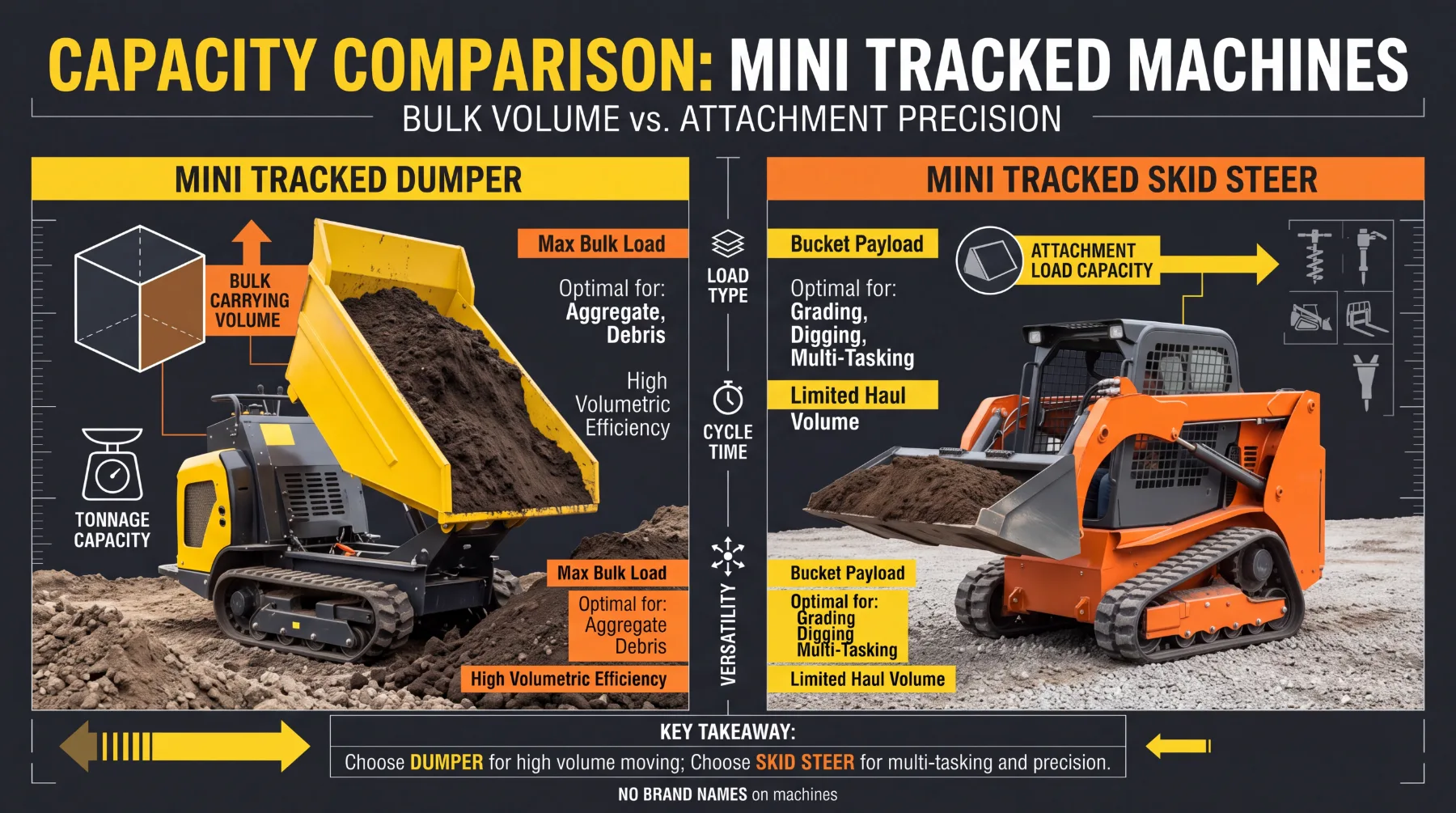
Capacity is where the practical differences between these machines become concrete, and each measures its carrying ability in a different way. Dumpers are designed specifically to carry bulk materials such as soil, gravel, sand, and debris across a jobsite. Their capacity is built around the volume and weight of material their skip can hold and transport in a single load, which is the whole point of the machine. A dumper is engineered to shoulder substantial loads of loose material and move them efficiently, so its carrying capacity is the defining specification you weigh when matching it to your work.
Skid steer capacity works differently and depends on several interconnected factors. Rather than a single carrying figure, a skid steer's ability to handle material rests on its operating weight, its rated operating capacity, and the attachment being used at the time. The operating weight anchors the machine and influences how much it can safely lift and carry, while the rated operating capacity defines how much load it can handle securely at the front without compromising stability. The attachment then shapes what and how much the machine can move in practice.
This difference in how capacity is defined matters when you compare the two. Consider the distinction:
- A dumper's capacity is straightforward: how much bulk material its skip can carry and transport in one load.
- A skid steer's capacity is conditional, varying with its rated operating capacity and the specific attachment fitted for the task at hand.
The practical upshot is that a dumper is typically the stronger choice when you need to move large, consistent volumes of bulk material in each trip, because its carrying capacity is purpose-built for exactly that. A skid steer, meanwhile, offers capacity that flexes with the job, letting you match the attachment to the load rather than relying on a single fixed skip. When weighing the two, define the material you move most and the volumes involved, then judge each machine's capacity against that real requirement rather than against a headline figure alone.
Maneuverability and Jobsite Access
How a machine moves around your site is often as important as what it can carry, and here the two machines show distinct strengths. A skid steer offers excellent maneuverability, making it well suited to working around buildings, through landscaping areas, and within confined spaces. Its compact footprint and tight turning ability let it operate close to structures and obstacles where larger equipment simply cannot fit. For jobs where access is restricted, where the machine must work near finished surfaces, or where space is genuinely limited, the skid steer's agility is a decisive advantage that keeps work moving in tight conditions.
Dumpers bring a different kind of mobility advantage. They come into their own when materials need to be transported across uneven terrain or over longer routes on a jobsite. A dumper is built to carry a substantial load steadily across ground that would slow other equipment, covering distance with a full skip while remaining stable and controlled. When your work involves hauling material from one end of a site to another, or moving loads across rough, muddy, or sloping ground, the dumper's design supports that kind of transport dependably.
The right choice therefore depends heavily on the nature of your site and your movement needs. Think about how each machine matches your conditions:
- Choose the skid steer's maneuverability when your work is concentrated in tight, congested, or access-sensitive areas that demand a machine able to turn and position precisely.
- Choose the dumper's transport strength when material must travel across distance or over challenging terrain, where steady hauling matters more than tight turning.
Many sites present a mix of both demands, but one usually dominates. A congested urban job or a landscaping project favors the skid steer's confined-space agility, while a larger site with long haul routes and rough ground favors the dumper's ability to carry material across it. Judging your site honestly against these strengths points you toward the machine whose mobility genuinely fits the way you need to work.
Dumping and Loading Performance
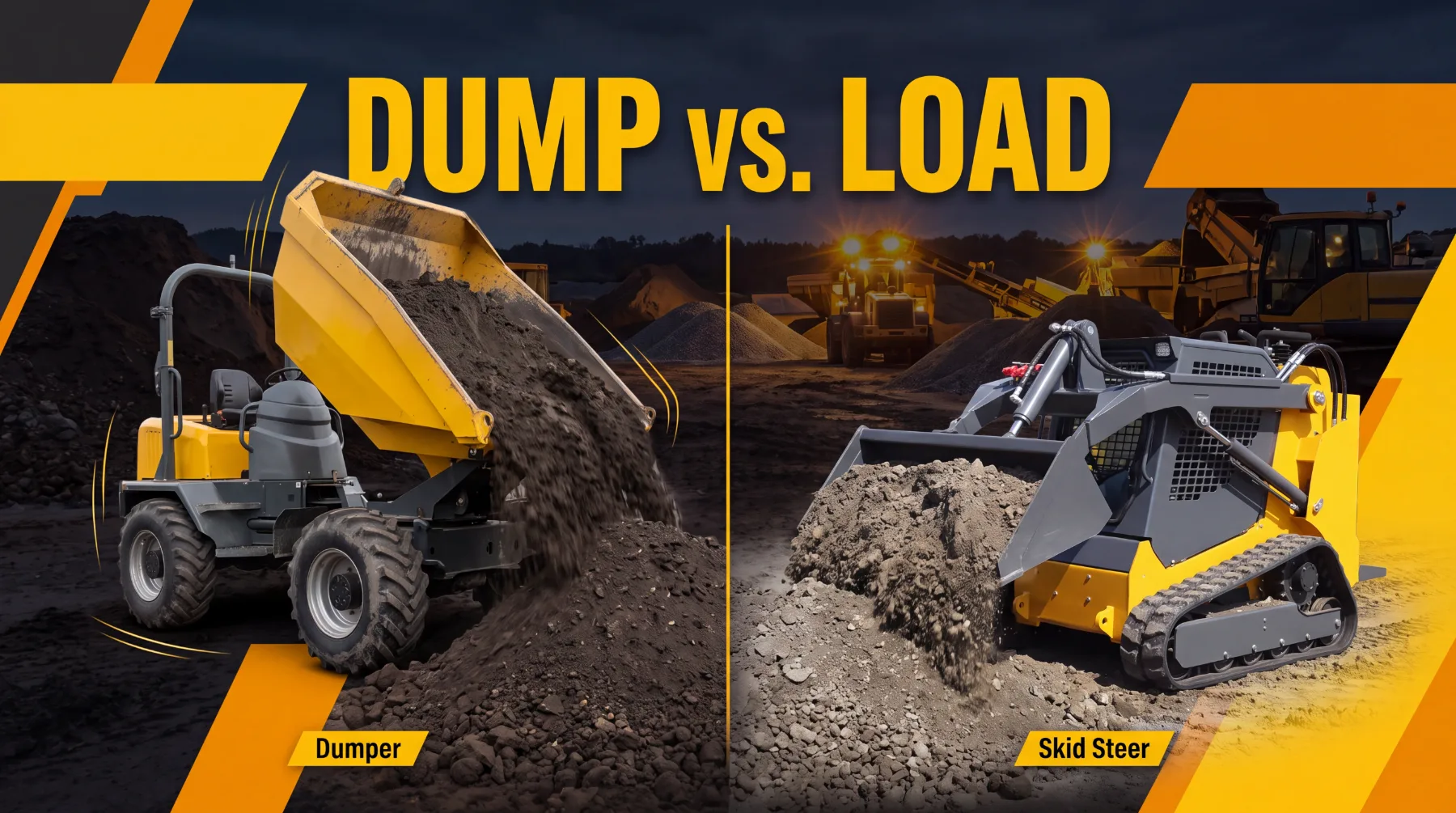
The way each machine loads and unloads material reveals much about its intended purpose. Dumpers provide a dedicated tipping bed designed for quickly unloading bulk materials. Once the skip is full, the machine tips its load out cleanly in seconds, emptying soil, gravel, or debris exactly where it needs to go. This dedicated dumping function is the heart of what a dumper does, and it makes the machine exceptionally efficient at the transport-and-tip cycle. For repetitive hauling where speed of unloading matters, that purpose-built tipping bed delivers a fast, reliable result every trip.
A skid steer approaches loading and unloading with far greater versatility. Rather than a single tipping bed, it uses buckets or other attachments to scoop, lift, carry, and place materials. With a bucket, it can dig into a stockpile, fill itself, carry the material, and deposit it with control. Swap the attachment, and the same machine can lift pallets, grip debris, grade a surface, or handle material in ways a tipping bed never could. This adaptability gives the skid steer a broad range of handling capabilities that extend well beyond simple unloading.
That contrast defines the trade-off between the two machines. The dumper is a specialist, optimized for one thing it does supremely well: carrying bulk material and tipping it out fast. The skid steer is a generalist, trading the dumper's dedicated unloading speed for the ability to perform many different handling tasks with precision. Neither approach is inherently better; they simply suit different work.
For an operation defined by moving and dumping large volumes of loose material, the dumper's dedicated tipping bed is hard to beat for sheer efficiency. For work that requires placing material carefully, loading trucks, handling varied loads, or combining material movement with other tasks, the skid steer's attachment-based versatility offers far more. Matching this loading and unloading behavior to the way your project actually handles material is central to choosing the right machine.
Choosing the Right Machine
Bringing all these factors together, the decision between a dumper and a skid steer comes down to what your project truly needs from the machine. The guiding principle is simple: match the machine to the dominant task. When efficient material transport and unloading are the main priorities, a dumper is the sound choice. It is purpose-built to carry bulk material across a site and tip it out quickly, and for work defined by that repetitive haul-and-dump cycle, no general-purpose machine matches its focused efficiency.
A skid steer may be the better choice when your project requires more than transport alone. If the work combines material handling with digging, grading, loading, or attachment versatility, the skid steer's adaptability becomes invaluable. It can move material and also perform the many other tasks a jobsite demands, switching attachments to suit the work rather than being limited to a single function. For projects with varied, changing demands, that flexibility often outweighs the transport efficiency a dumper provides.
To decide with confidence, weigh your real requirements against what each machine does best:
- Lean toward a dumper when your work centers on moving large, consistent volumes of bulk material across a site and unloading it quickly, especially over distance or rough terrain.
- Lean toward a skid steer when your work involves handling material in multiple ways, needs attachment versatility, or combines transport with digging, grading, lifting, or loading.
The most dependable approach is to define your primary tasks first, then identify which machine's core strengths align with them. Consider the material you handle, the volumes involved, the layout and terrain of your site, and whether your work is focused on transport or spans many handling jobs. If one clear need dominates, the choice usually follows naturally. Some operations benefit from both machines working together, the dumper hauling while the skid steer loads and handles, but for a single purchase, matching the machine to your most frequent and important work is the surest path to a productive, cost-effective result.
Conclusion
Choosing between a dumper and a skid steer comes down to understanding what each machine is built to do. A dumper is a transport specialist, designed to carry bulk materials such as soil, gravel, sand, and debris across a site and unload them quickly through a dedicated tipping bed. A skid steer is a versatile handler, built to lift, push, dig, grade, and move material using a wide range of attachments, with capacity that flexes according to its rated operating capacity and the tool fitted. Each has clear strengths: the dumper excels at moving large volumes over distance and rough terrain, while the skid steer shines in confined spaces and across varied handling tasks. The right decision depends on your dominant need. Choose a dumper when efficient transport and unloading define your work, and a skid steer when material handling combines with digging, grading, loading, or attachment versatility. Define your primary tasks, your material, and your site conditions, then match the machine to them. Do that, and you will invest in equipment that works with your operation rather than against it, delivering reliable, efficient performance on every job.
Frequently Asked Questions
1. What is the main difference between a dumper and a skid steer?
The core difference lies in their purpose. A dumper is primarily designed to transport and unload bulk materials, so its whole design centers on carrying a load from one point to another and tipping it out efficiently. It is a specialist in moving soil, gravel, sand, and debris across a site. A skid steer, on the other hand, is built for material handling in a broader sense. It handles, lifts, pushes, and moves material using different attachments, making it far more adaptable to varied tasks. Rather than specializing in transport alone, it can scoop material with a bucket, lift pallets with forks, grade a surface, push debris, and switch between these roles as needed. In short, the dumper is a transport specialist while the skid steer is a versatile handler. Framing your decision around transport versus handling usually makes the right choice clear.
2. Which machine can carry more material?
It depends on how you measure capacity, because the two machines define it differently. A dumper's capacity is straightforward: it is built around the volume and weight of bulk material its skip can hold and transport in a single load. Dumpers are engineered specifically to shoulder substantial loads of loose material such as soil, gravel, sand, and debris, and move them efficiently across a site. A skid steer's capacity is more conditional, depending on its operating weight, its rated operating capacity, and the attachment being used at the time. The operating weight anchors the machine, the rated operating capacity defines how much it can handle securely at the front, and the attachment shapes what it can move in practice. For moving large, consistent volumes of bulk material in each trip, a dumper is typically the stronger choice, while a skid steer offers capacity that flexes with the task.
3. Which is better for tight or confined jobsites?
A skid steer is generally the better choice for tight or confined conditions. It offers excellent maneuverability, making it well suited to working around buildings, through landscaping areas, and within restricted spaces. Its compact footprint and tight turning ability let it operate close to structures, obstacles, and finished surfaces where larger equipment cannot fit. For jobs where access is limited or the machine must position itself precisely in a small area, that agility is a decisive advantage. Dumpers, by contrast, bring their strength to a different kind of movement. They excel when materials need to be transported across uneven terrain or over longer routes on a site, carrying a full load steadily across ground that would slow other equipment. So if your work is concentrated in congested, access-sensitive areas, the skid steer fits best, while a dumper suits sites with longer haul routes and challenging ground.
4. How does unloading differ between the two machines?
The unloading methods reflect each machine's purpose. A dumper provides a dedicated tipping bed designed for quickly unloading bulk materials. Once the skip is full, the machine tips its load out cleanly in seconds, depositing soil, gravel, or debris exactly where needed. This dedicated dumping function makes the dumper exceptionally efficient at the repetitive transport-and-tip cycle. A skid steer works differently, using buckets or other attachments to scoop, lift, carry, and place materials. With a bucket, it can dig into a stockpile, fill itself, carry the load, and deposit it with control, and swapping attachments lets it lift pallets, grip debris, or grade a surface. This gives the skid steer a broad range of handling capabilities beyond simple unloading. The dumper is a specialist optimized for fast bulk unloading, while the skid steer trades some of that unloading speed for versatility across many handling tasks.
5. When should I choose a dumper over a skid steer, or the other way around?
Match the machine to your dominant task. Choose a dumper when efficient material transport and unloading are the main priorities, since it is purpose-built to carry bulk material across a site and tip it out quickly. For work defined by that repetitive haul-and-dump cycle, especially over distance or rough terrain, its focused efficiency is hard to beat. Choose a skid steer when your project requires material handling combined with digging, grading, loading, or attachment versatility. Its adaptability lets it move material and perform many other jobsite tasks by switching attachments, which is invaluable for projects with varied, changing demands. The dependable approach is to define your primary tasks first, then identify which machine's strengths align with them, considering the material you handle, the volumes involved, and your site's layout and terrain. Some operations benefit from both machines working together, but for a single choice, match the machine to your most frequent and important work.
